
Interview with Natural Solutions: Why Nature Must Remain the Primary Stakeholder
For nearly two decades, Natural Solutions has been building digital tools not to abstract nature into dashboards, but to make biodiversity more visible, legible, and actionable for those responsible for protecting it. Founded by a software engineer turned conservation technologist after witnessing the limits of field data collection firsthand, the company sits at a particular intersection of nature tech, one grounded in long-term collaboration with ecologists, public authorities, and conservation practitioners.
In this “Member Spotlight: Ask The Nature Tech Expert” interview, Natural Solutions reflects on what it means to design technology with ecological humility, why open data and modular systems matter, and how nature tech can support decision-making without flattening the complexity of living systems.
Image Credits: Unsplash
About Natural Solutions
Q: Tell us the story behind Natural Solutions. What led you to create the company, and how has your mission evolved over the past 17 years?
Natural Solutions was born from a simple conviction: technology should serve biodiversity. I was trained as a software engineer (MSc at the Trinity College of Dublin) and it was during a field mission in Morocco that it clicked for me. I witnessed conservation teams struggle to protect the Houbara Bustard with almost no digital tools to collect or analyse biodiversity data. I realized that my technical skills could be redirected toward something essential: helping nature be seen, understood, and protected.
I returned to France and founded Natural Solutions to support protected areas and natural parks in structuring and centralizing biodiversity observations. The goal was pragmatic: transform scattered field data into usable knowledge for decision-making.
Over the years, our mission has remained consistent but has broadened in scale and ambition. We are now more than 30 people working to improve biodiversity knowledge while staying aligned with global biodiversity frameworks. Natural Solutions works always with the same guiding principle: empowering biodiversity with technology.
Q: How would you describe what Natural Solutions does, and in what part of ‘nature tech’ your work sits? Is there something that makes your approach stand out in biodiversity and conservation tech?
We didn’t set out to become a “nature tech” company, it’s a label that came later. At the beginning, we were software developers working closely with ecologists who needed better tools.
Over time, our role has evolved. Today, our focus is on helping humans understand biodiversity better, using a combination of field data, advanced sensors (satellite imagery, LiDAR, camera traps, and eDNA) and artificial intelligence.
What makes us different is our long-term immersion in the field. We’ve spent nearly 20 years working with park managers, researchers, local authorities, and NGOs. That experience teaches humility: ecosystems don’t fit neatly into dashboards, and technology only works if it respects ecological realities. That’s also why we strongly believe in open-source tools, open data, and strong UX/UI.
Approach and Impact
Q. What kinds of tools, platforms, or technologies do you develop or provide for biodiversity stakeholders? How do your solutions help organisations or communities manage, track, or restore nature?
We develop AI-powered and interoperable digital platforms that support biodiversity stakeholders around 3 dimensions : conservation, restoration and raising awareness. Among them, we can cite :
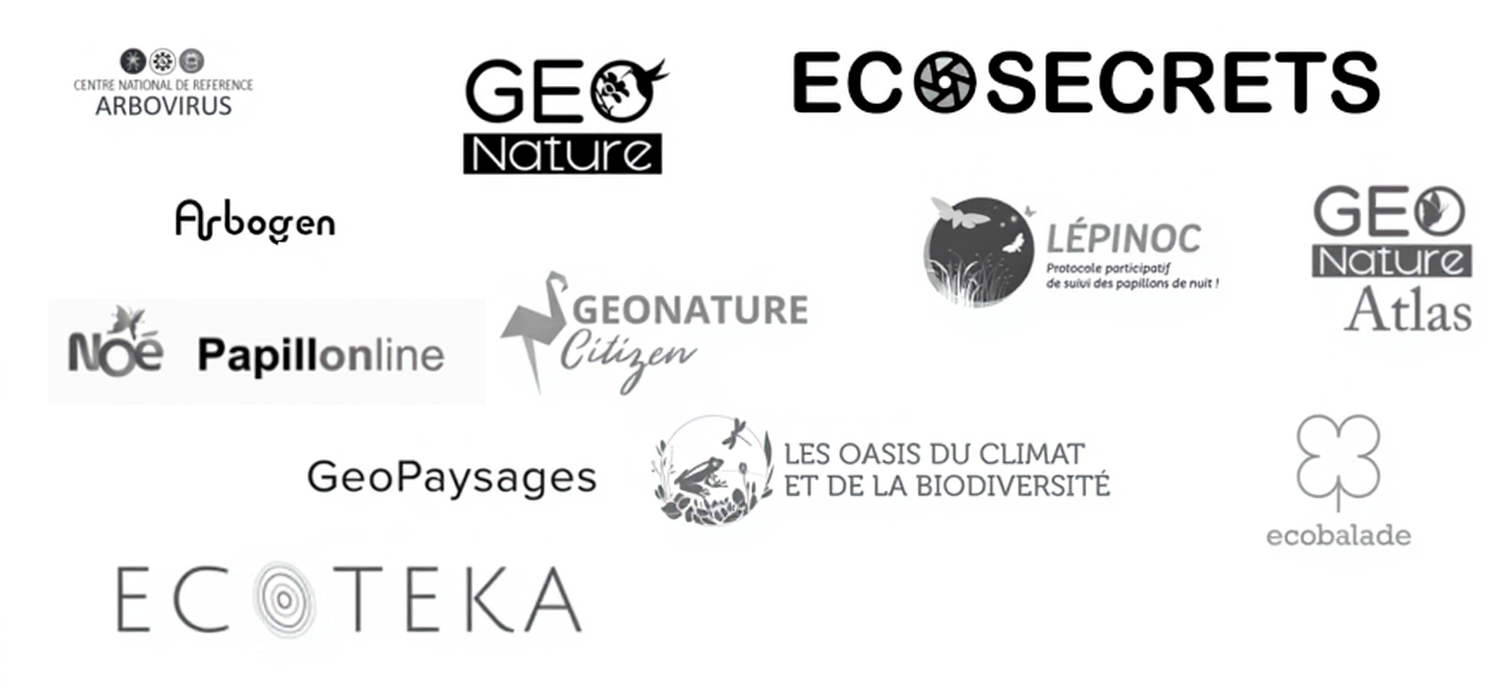
GeoNature, an open-source platform for collecting, structuring, and sharing biodiversity data.
Ecoteka helps to support cities in managing urban biodiversity and climate adaptation, using AI-powered LiDAR and satellite data to map trees, plan interventions, and strengthen ecological corridors.
For wildlife monitoring, ecoSecrets uses AI to automate species identification from camera trap data, significantly reducing analysis time and improving decision-making.
We also provide tools for territorial and landscape monitoring, such as GeoPaysage, which helps track and visualise landscape changes over time to support planning and impact assessment.
Together, these tools help organizations better observe, understand, and act for biodiversity, at global and local scales.
Q. How do you decide when to develop a new product or custom software for biodiversity? What’s your take on whether a single, off-the-shelf solution can meet the needs of everyone working in this field?
Biodiversity is fundamentally local and heterogeneous. In our opinion, a single off-the-shelf solution can never fully meet the needs of all ecosystems, territories, or stakeholders.
Our approach balances shared foundations (open standards, reusable cores) with local adaptability. We build modular systems that can be adapted to specific ecological, regulatory, and cultural contexts, whether the constraints come from local biodiversity, national legislation, or field conditions such as offline usage.
Q. Can you share an example of a success story or milestone your team is proud of? What kind of impact have you seen so far, for your clients or for conservation more broadly?
After nearly 20 years, we’re fortunate to have many success stories, but three in particular illustrate our approach and impact.
First, GeoNature. We are one of the main contributors to this global open-source biodiversity data platform, which has become a cornerstone of biodiversity data management in France. Used by national and regional natural parks, public institutions, and research organisations, it clearly demonstrates the strength of an open-source, collaborative community.
Second, Ecoteka, a product we developed from scratch to help cities become more resilient in the face of climate change and biodiversity loss.
Third, our long-term partnership with Reneco Wildlife Consultants, which lasts since more than 15 years. This collaboration goes far beyond a single project: we have co-developed more than 12 custom applications to support their full range of conservation needs. It’s a strong example of how long-term and trust-based collaboration can lead to highly effective, tailored digital tools for biodiversity protection.
More broadly, we now support over 200 clients, and our solutions contribute daily to biodiversity monitoring, impact mitigation, and conservation strategies across a wide range of territories.
Intersection with Nature Tech
Q. How does your work intersect with nature tech innovation? Whether it’s open data, remote sensing, citizen science, AI-driven analytics, or urban nature platforms, what are some technologies or approaches you’re passionate about?
We’ve always evolved alongside the field. From the beginning, Natural Solutions has recruited experts as needs emerged: ecologists, data scientists, UX designers, remote sensing specialists.
Today, we’re particularly excited by:
AI-driven ecological analytics, especially for large-scale, multi-sensor data
Non-anthropocentric design, where technology is shaped around ecological realities, not just human convenience
Citizen science platforms, which reconnect people to living systems
Open data and interoperability, as foundations for collective intelligence
AI will be essential, not to simplify nature, but to help us navigate its complexity responsibly.
Q. What trends, challenges, or opportunities are you seeing right now in the nature tech sector? Where do you see the biggest needs: technical, strategic, or community driven?
We’re seeing a major wave of opportunity driven by new European regulations such as CSRD, ESG frameworks, and biodiversity reporting requirements. Many private companies are seriously engaging with biodiversity data not out of curiosity, but because it has become a strategic and regulatory necessity.
In biodiversity, there’s what we know, what we know we don’t know, and what we don’t even realise we’re missing. When nearly 90% of species are still unknown, reporting can easily become misleading if uncertainty isn’t acknowledged.
The challenge is therefore twofold: bridging the gap between ecological science and the corporate world and helping organisations understand that uncertainty is not a failure of data, but an intrinsic characteristic of living systems. The biggest needs today span all levels:
Technical, to collect on the field, aggregate, and interpret biodiversity signals
Strategic, to integrate uncertainty into reporting and decision-making rather than ignoring it
Community-driven, to pool knowledge, funding, and data instead of working in silos.
Collaboration and Community
Q. Who do you typically work with (clients, partners, community groups), and what kinds of collaborations are most valuable to your work?
We primarily work with public-sector actors, including cities, regional and national natural parks, government agencies, (French Ministry of Ecology, Environment Agency of Abu Dhabi) and NGOs (Noé NGO, Wings of The ocean etc) . These organisations represent the core of our activity, as they are directly responsible for managing territories and protecting biodiversity.
We also collaborate with private actors, mainly environmental and biodiversity impact assessment firms. These partnerships are growing as regulatory frameworks increasingly require biodiversity data and expertise.
What matters most to us is staying deeply connected to the field. Technology alone is meaningless without up-to-date, high-quality ecological data. That’s why our most valuable collaborations are with environmental consulting firms and biodiversity experts who work directly on the ground.
Q. What role do you see Natural Solutions playing within the broader nature tech community, both in France and more widely? What is your unique perspective or contribution among other tech providers for biodiversity?
Thanks to our 20 years of experience, we see Natural Solutions as a leader and a structuring facilitator, offering long-term perspective, methodological clarity, and ethical grounding.
Our contribution is not just technological, but cultural: reminding the community that nature is the primary stakeholder, and that tech must remain a means, not an end.
Ambitions and Community Support
Q. What are your most important ambitions or goals for Natural Solutions in the short, mid, and long term?
In the short to mid term:
Expand internationally (Europe, Middle East, North America)
Strengthen AI capabilities to:
Aggregate multi-sensor biodiversity data
Improve communication between science, policy, and action
In the long term:
Contribute to a new form of ecological mediation between humans and non-humans
Help build collective infrastructures that allow societies to coexist with living systems more consciously
Q. How can the Nature Tech Collective or this community best support you? Are there kinds of partnerships, introductions, or expertise you’re looking for?
By acting as a learning community, not a competitive one.
Avoid duplication, encourage synergies, map actors and needs, share data responsibly, and function like an ecosystem architect, inspired by permaculture rather than market competition.
Q. What do you hope to contribute to the Nature Tech Collective community? (e.g., skills, product knowledge, open data advocacy, tech know-how, connections, or thought leadership)
We can help:
Structure the collective in France
Co-define its manifesto, and values
Share experience in open data, long-term platforms, and governance
Support ecosystem mapping and strategic alignment
Personal and Publication
Q. What’s a resource: a book, tool, podcast, or leader you recommend to others interested in biodiversity or nature tech?
Reinventing Organizations by Frédéric Laloux, and the concept of the Opal Organization, which deeply resonates with how collectives and living systems function.
Q. What’s your team’s “why”, the thing that keeps you motivated to push the best of technology for biodiversity?
Our first client is nature itself. We’re all passionate about nature conservation. We do not work to debug apps but to ensure technology has tangible and positive impacts on the living world.
Natural Solutions is a mission-driven company because we believe technology should help us ask better questions about the living world—not distance us from it.
Q. What’s next for Natural Solutions that you’re most excited about?
We’re working toward AI-driven systems that act as interfaces between humans and non-humans. By mobilising technology to see more, hear more, and understand more, we believe we can miss fewer signals from the living world and build uncomfortable but necessary coalitions to protect it.
The future of biodiversity depends on our ability to perceive life more fully and that perception could come through responsible nature tech.
For the nature tech community, the main key takeway is that impact in biodiversity does not come from clever tools alone, but from staying close to ecological reality over time. Natural Solutions’ work shows the value of building technology slowly, in direct collaboration with those working in the field, and of accepting uncertainty as part of how living systems function rather than something to hide. As interest in biodiversity data grows, this approach is a reminder that credibility, openness, and long-term relationships matter more than scale or speed.
You can learn more about Natural Solutions’ work here, and follow them on LinkedIn here for updates on their projects and collaborations.
