
Off the Shelf, Off by a Wide Margin: Valinor Strategies on Adapting Nature Tech for East Asia
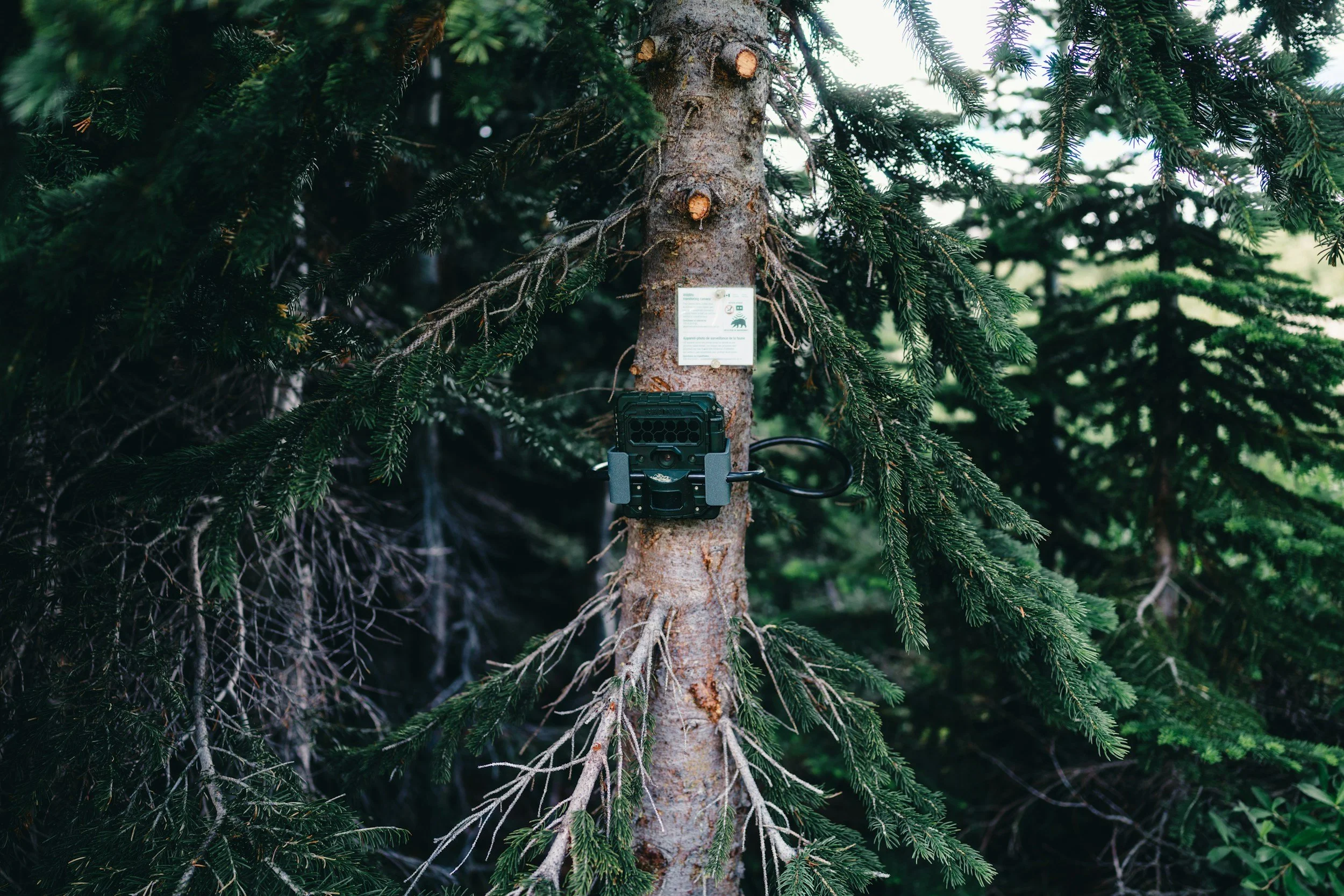
Photo by Ali Kazal, Pexels
Many of the leading conservation AI models are trained overwhelmingly on North American and European species. Point one at a subtropical Asian forest, as Peter Haasz puts it, and performance falls off a cliff.
Peter is the Founder and Director of Valinor Strategies, a cooperative network that adapts global nature tech to East Asian species and field conditions. Its work ranges from a full AI programme with Kadoorie Farm & Botanic Garden in Hong Kong to a computer vision tool for identifying illegally traded turtles. Alongside the technical work, Valinor structures the resulting data so it can support disclosure, funding and investment.
In this Member Spotlight, Peter explains why training data, not compute, is often the real constraint, and why local relationships count as infrastructure. He also makes the case that most conservation projects aren't investable yet, and explains what needs to change before they can be.
About Valinor Strategies
Q. What's the core problem Valinor Strategies exists to solve?
There is a lot of excellent conservation technology in the world, and very little of it works properly in East Asia. Foundation models for species identification are trained overwhelmingly on North American and European taxa. Bioacoustic classifiers know European warblers and North American frogs. Point any of it at a subtropical Asian forest and performance falls off a cliff.
Valinor Strategies exists to close that gap in two directions. First, technically: taking the best global models and adapting them to local species, soundscapes, and field conditions, so conservation organisations in the region get tools that actually perform. Second, financially: making sure the data those tools produce is structured well enough that it can support funding decisions, disclosure obligations, and eventually investment.
We are also developing our own tooling where we see a gap nobody is filling. Our current example is a wildlife trade enforcement system, which uses computer vision to identify illegally traded animals both at the border and in pet shops or restaurants. We started with turtles, one of the most heavily trafficked taxa in Hong Kong and China. We are finalizing a whitepaper on the topic and planning to turn it into a proper product later this year.
Q. You describe Valinor Strategies as a cooperative network rather than a traditional firm. What does that look like in practice, who's involved and how do you work together?
In practice, it means we hold a bench rather than a payroll. Valinor is the constant, strategy, technical delivery, and client relationships, and around that sits a network of specialists we bring in per project, according to what that specific project needs.
The reason is conservation and nature finance projects are almost always bounded in scope and time, often needing a different combination of skills. A camera trap deployment for a botanic garden and a TNFD readiness review for a corporate client require only partially overlapping sets of expertise.
The network is drawn from professional relationships built over years rather than recruited cold, and includes people like Spencer Liu, a former McKinsey associate partner now running his own climate advisory; Derek Wu on TNFD and nature risk, who was AXA Climate’s Hong Kong Consulting Lead; Vince Jankovics on AI and technical delivery through Dot Square Lab, his London-based AI company; or Milan Janosov, one of the most widely followed voices in geospatial data science in the world.
What this model buys is that the person working on each project is genuinely one of the best people available for that particular problem.
Q. How did Valinor Strategies come together?
I have been a nature nerd since I learned to walk. I trained as a biologist, and for a while I ran a small research NGO back in Europe. That experience taught me something I have never been able to unlearn: funding is the number one showstopper for this kind of work. I spent a decade at Morgan Stanley and learnt how world-class financing and AI projects are actually run, while keeping nature work going on the side. During this time, it became quite obvious that Asia, or at least Hong Kong and Japan, my two Asian homes, is lagging behind the West on nature tech. Not on ecological expertise, which is excellent here, but on tooling and on adaptation of new methods.
I started Valinor Strategies in 2023 to fill both these gaps: bring cutting-edge nature tech to East Asia, and use the resulting data to unlock funding with the financing vehicle best suited for different projects. The network structure manifested quite organically later, either as I recruited specific expertise for projects and decided to keep the relationship running, or evolved client relationships with particularly efficient partners into an official Network Member status. We formalized all this as Valinor Network after we realized how much more efficient this model is than creating a unified sprawling company.
Photo by Jacky Chiu, Pexels
The Tech Side
Q. What kind of AI tools and workflows is Valinor Strategies building or deploying right now?
The largest current project is with Kadoorie Farm & Botanic Garden in Hong Kong, where we are building an AI programme across their conservation work: camera trap pipelines, acoustic monitoring, transfer learning for species identification on local taxa, and drone imaging. That covers both the technical build and the governance around it, AI policy, strategy, and the workflows that let staff actually use the outputs.
Our own product work centers on wildlife trade enforcement. With Dot Square Lab, we have been developing a computer vision model for identifying illegally traded animals, starting with local turtles. The technical challenge is that the species that matter most for enforcement are rare and have few research-grade published images, so existing foundation models struggle to identify them. We are finalizing a whitepaper on our approach and initial results with the intention to turn it into a deployable tool for border control and for community reporting later.
Beyond that, the work is spread across several fronts. We are working with a Singapore-based NGO to help chicken farmers transition from battery cages to cage-free systems using AI; helping an Okinawan sea turtle conservation NGO with the financing side of a ghost net recycling facility; collaborating with Wilder Sensing on bioacoustics and reporting; and with Lochan & Co. on nature tech and green finance projects.
The common thread is that we are rarely building from zero. We are adapting, fine-tuning, and connecting things, which is usually the faster and more honest route to something that works in the field.
Q. Why did you need to build or adapt these tools rather than use something off the shelf?
Because off the shelf, in this region, mostly means off by a wide margin. The global foundation models are genuinely impressive pieces of work: SpeciesNet or BioCLIP for visual ID, the various BirdNET-derived acoustic classifiers, but their training data on the rarest and most conservation-relevant species in East Asian taxa are thinly represented. For example, Merlin Bird ID has around 50% coverage in Hong Kong, but as you might expect, the covered 50% are mostly the birds you encounter in the middle of the city.
For our wildlife trade project, running zero-shot classification on our target turtle species against current foundation models also confirmed the limitation clearly. The general approach is don't rebuild from scratch, because the general visual and acoustic representations in these models are excellent and enormously expensive to reproduce. Take the global model and fine-tune it on local taxa. Our wildlife trade work uses BioCLIP as the deployment backbone with a set of fine-tuning tiers on top.
However, the binding constraint is usually not compute or method, it is training data. This is why local relationships matter as much as the technical work, and why we treat them as part of the infrastructure. Access to a botanic garden's camera trap archive or a university’s unpublished specimen collection can be a main differentiator for these projects.
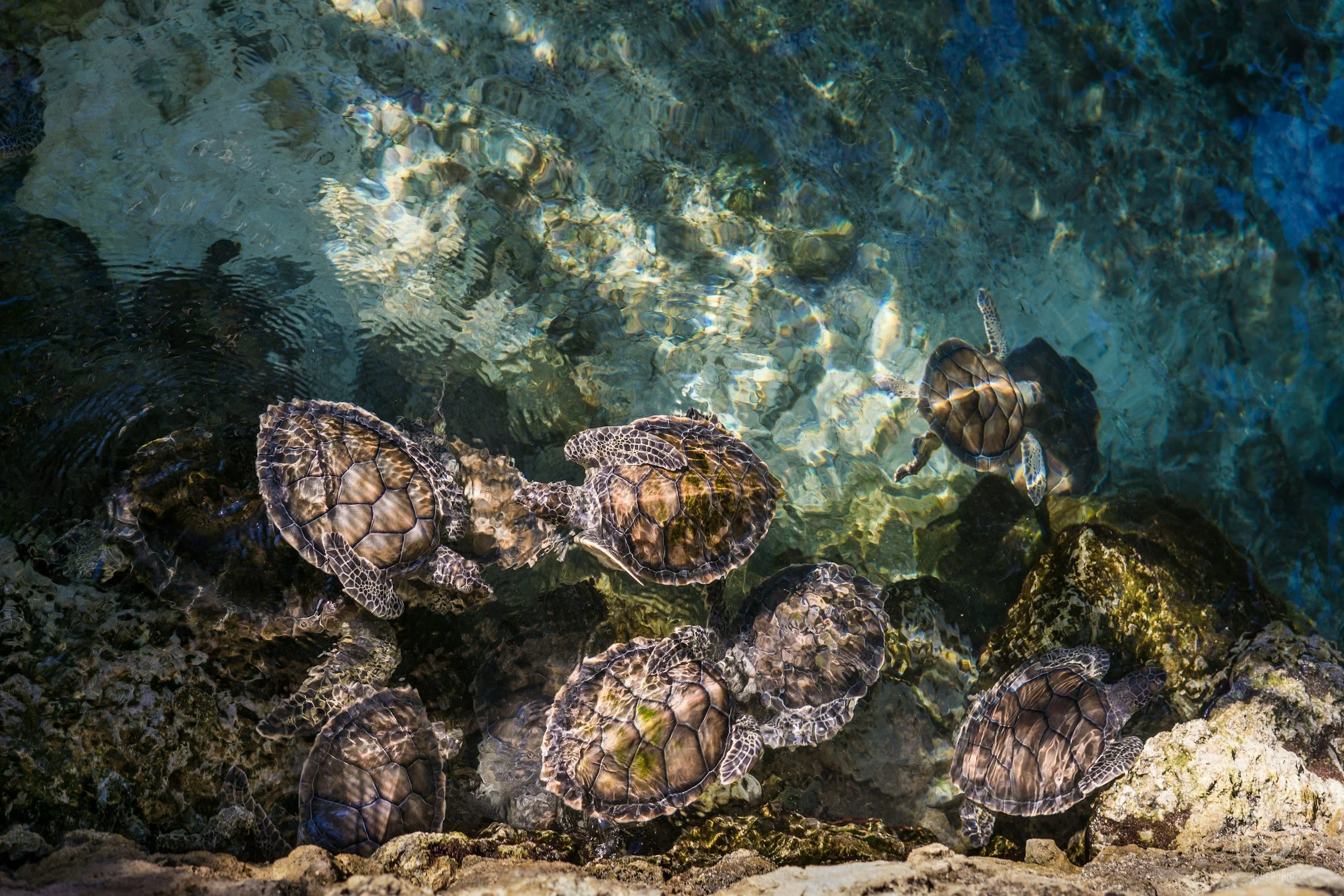
Image Credits: Unsplash
Q. Can you tell us more about the conservation organization Valinor Strategies is working with in Hong Kong, and what that partnership involves?
We have an agreement with Kadoorie Farm & Botanic Garden. KFBG runs conservation work across Hong Kong and the wider region, having monitoring data that is becoming time-consuming to process manually, alongside a healthy scepticism about whether AI would help or just add an unnecessary layer of complexity.
The engagement is a full AI programme rather than a single tool. On the technical side that means camera trap pipelines, acoustic monitoring, transfer learning for species identification tuned to local taxa, and drone imaging. On the organisational side it means AI policy, governance, and training, these latter bits might seem less important from a conservation point of view, but are often the decisive factors whether that AI-skepticism is warranted or not. It’s also important that the pipelines are built to be run by KFBG, not by us in perpetuity. The capability stays with them even after the Valinor engagement ends.
The wildlife whitepaper is also a genuine collaboration: Astrid Andersson at the University of Hong Kong and Sam Inglis at ADM Capital Foundation are advising, and Dot Square Lab is the technical co-author.
Image Credits: Unsplash
The Finance Side
Q. How does Valinor Strategies turn on-the-ground monitoring work into something institutional finance actually wants to see?
Most of what we do today sits on the technical side of that bridge: we make projects reporting, and investment-ready. What this means is designing the entire project monitoring workflow so that the data is ready for a disclosure framework or a verifier review. What this entails is mostly decisions made early: first and foremost establishing a baseline properly to demonstrate change and additionality; keeping the right data formats and methodology attached so an external reviewer can trace how a number was produced; and mapping outputs to the frameworks a client will face, TNFD's LEAP process today, and hopefully soon the ISSB nature standard.
The reason this is worth doing well is that verification credibility is what actually moves money in nature finance. This is visible even in mature instruments: the pricing benefit on green bonds shows up mainly where there has been external review. Biodiversity outcomes are far harder to verify than CO2, so the monitoring layer carries proportionately more weight.
Further finance-side capability in our network is real (e.g., Derek on TNFD and nature-related risk, Spencer on climate and sustainable finance strategy) and it's the direction we're building in.
Q. Where do conservation organizations get stuck most often when trying to make their work "investable"?
The sector's standard diagnosis is that there's plenty of capital and not enough bankable pipeline. That framing has been around for a long time, after roughly forty years of "innovative finance" and "market-based solutions," governments still provide over 80% of nature funding. Most conservation projects don't generate direct cash flow and at this point it is still difficult to translate ecological value into dollars. Scale also compounds it: institutional investors often treat anything under USD 100 million as too small to be worth the diligence. Asset managers that might solve this bottleneck, that group conservation projects together and create investible financial products on top of individual projects need standardized and well-documented data for every underlying project.
Let’s start with the uncomfortable truth: most conservation projects are not investable today, and telling them otherwise wastes everyone's time. If a project's only output is a nature or climate outcome with no monetary return attached, it needs philanthropic, government, or multilateral funding. Biodiversity and climate credit markets are changing this, but unevenly. Where regulation creates the demand, England's biodiversity net gain regime or the New South Wales offsets scheme, there are functioning markets that a project can genuinely underwrite against. Where demand is voluntary, the picture is thinner: the entire global voluntary biodiversity credit market has traded well under USD 2 million to date. For our region, this distinction is the whole story. None of those compliance markets exist in Hong Kong, or most of Asia. A project here cannot currently underwrite itself against a regulated demand source, which is precisely why the honest answer for most Asian conservation projects remains philanthropic, government, or multilateral funding.
Where projects do have a revenue-generating component the picture is different, and that's where blended finance, green loans, and nature-themed bonds genuinely apply. The pattern there is concessional or public capital taking first-loss risk so private capital will come in behind it. But it only works if there's a real revenue line to underwrite in the first place.
Then there's the part we work on. Even projects with a viable revenue model get stuck on verification: measurement designed for ecological interest rather than for audit, no credible baseline, no independent review, no traceability. Fixing this is usually the difference between a project that can be financed and one that can't.
The last piece, which gets underweighted: local management and genuine local benefit-sharing. Projects designed elsewhere and dropped into a landscape have a poor track record and increasingly get treated as a risk factor in diligence. Projects that are run by people with a stake in the outcome deliver a lot better and longer term results.
Community and Collaboration
Q. What is Valinor Strategies hoping to learn from other members in the collective?
We already established multiple ad-hoc collaborations or experience exchange sessions with different Nature Tech Collective members. Our usual questions are around tech we haven’t worked with yet (e.g., recently we needed to find the best 3rd party platform for camera trap video analysis suiting a very specific set of requirements); experience with visual or acoustic transfer learning in underrepresented regions; and I also expect several nature finance related questions to surface as we dig deeper into those projects.
Q. What kind of collaborators or projects is Valinor Strategies hoping to find through the community?
Most directly on the nature tech side: companies looking to expand into East Asia, wanting to add reporting and regulatory capabilities to their tech platforms, or just looking for more holistic advice around how to build nature tech with financing and reporting in mind.
On the financing side, we’re looking for nature projects trying to set up a reporting-ready MRV layer, planning to assess their profitability and financing options, or needing someone to implement any of these for them in practice.
If you're a nature tech company eyeing East Asia, a project building MRV that needs to stand up to verification, or working on monitoring for underrepresented species, please feel free to connect with Peter Haasz on LinkedIn. Find out more at valinorstrategies.com.
