
Ocean Iron Fertilization: A Promising Path for Carbon Removal?
The ocean is often described as a superhero when it comes to regulating our planet’s climate. Covering 71% of the Earth's surface, it plays a critical role in supporting life, yet it faces an existential crisis due to climate change. While stopping emissions is the primary goal, current data suggests that simply reducing fossil fuel use will not be enough to reach our climate targets and that we must also find ways to actively remove carbon dioxide from the atmosphere.
In a recent Ocean Series webinar, Dr. Ken Buesseler, Senior Scientist at the Woods Hole Oceanographic Institution, discussed a promising yet debated solution: Ocean Iron Fertilization. As a marine radiochemist and the director of the non-profit Exploring Ocean Iron Solutions (ExOIS), Dr. Buesseler shared insights on how adding small amounts of iron to the ocean could amplify its natural ability to store carbon, the potential impacts on marine ecosystems, and the path toward responsible research.
Why is the ocean essential for fighting climate change?
To understand the scale of the climate crisis, we must look at the numbers. Humans emit approximately 40 billion tons of CO2 annually. To stabilize the climate, we likely need to remove about 10 billion tons per year in the future. While land-based solutions like planting trees are valuable, they are limited by space and competing land uses.
The ocean, however, is a massive reservoir. It already holds about 38,000 billion tons of carbon in the deep ocean, compared to just 900 billion tons in the atmosphere (c. 50x more). Because the ocean already absorbs about one-third of our greenhouse gas emissions naturally, it is the most logical place to look for large-scale carbon storage solutions. No solution to climate change can ignore this massive sink. While coastal blue carbon ecosystems like mangroves and seagrasses are valuable, they're too small to absorb all our emissions. We must look to the open ocean for solutions at the scale we need.
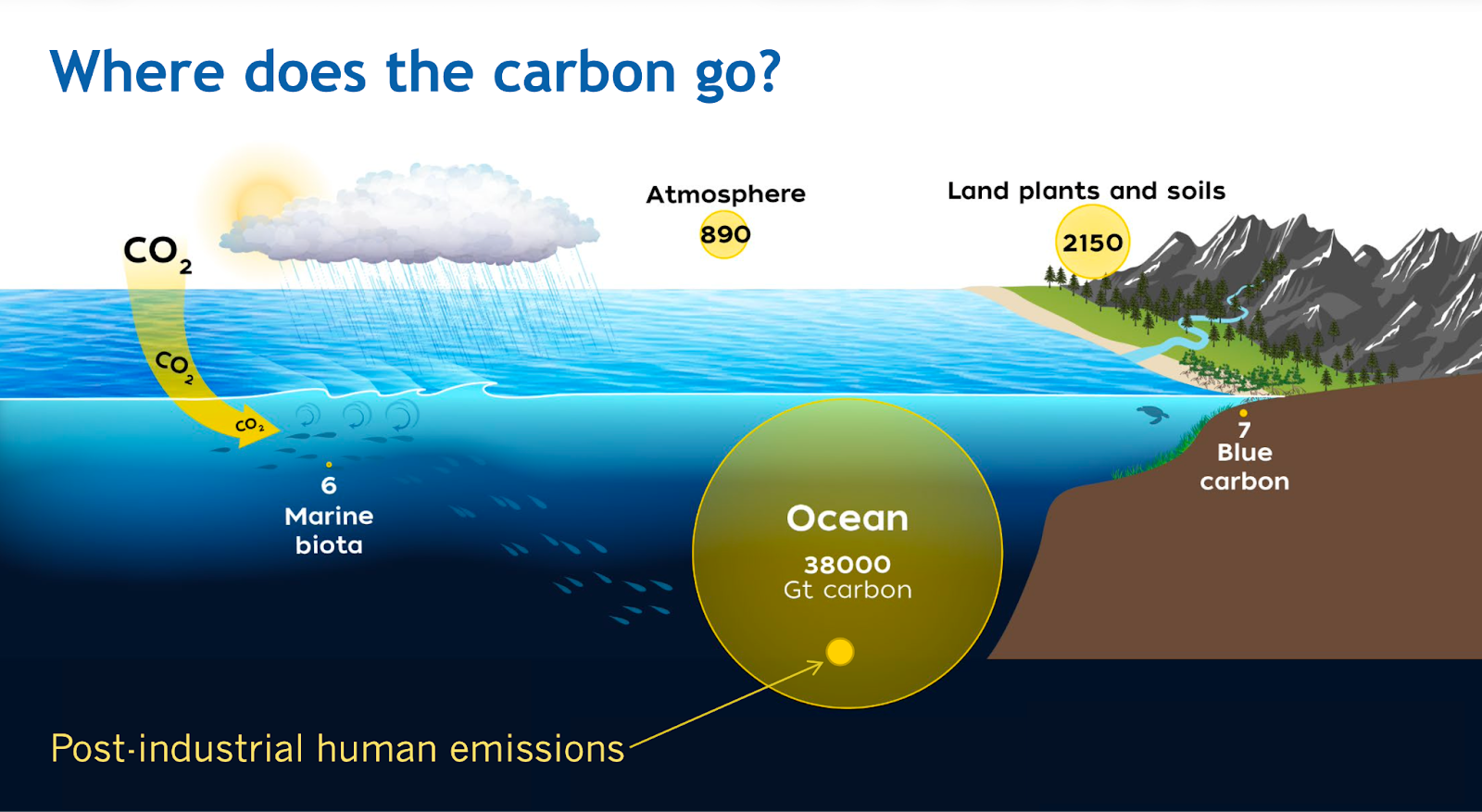
Multiple approaches across both ocean and land systems will likely be necessary. Rather than competing, different carbon removal methods should complement each other. Some require significant energy inputs, making them impractical until we dramatically reduce fossil fuel use. Others, like iron fertilization, work with natural processes and require relatively little energy or infrastructure.
What is ocean iron fertilization and why does iron matter?
The concept of iron fertilization mimics natural processes. Just like plants on land, microscopic ocean plants called phytoplankton produce half of the oxygen on Earth through photosynthesis. They need sunlight, nutrients, and surprisingly small amounts of iron to grow. In many parts of the open ocean, far from continents where dust naturally delivers iron, this essential nutrient is scarce. When iron is added to these areas, the results are dramatic. Past experiments showed that just one ton of iron could stimulate the growth of phytoplankton that absorb roughly 4,000 tons of carbon dioxide.
This efficiency sets iron fertilization apart from other carbon removal methods. The ratio of iron added to carbon captured is remarkably high, making it relatively affordable compared to other approaches. Iron is abundant and wouldn't require massive increases in mining to achieve meaningful scales of carbon removal.
How does the biological carbon pump work?
When phytoplankton grow, die, or get eaten, they create what marine biologist Rachel Carson beautifully called a marine “snowfall".

“When I think of the floor of the deep sea.. I see always the steady, unremitting, downward drift of materials from above, flake upon flake, layer upon layer, the most stupendous “snowfall” the earth has ever seen” ~ Rachel Carson, The Sea Around Us.
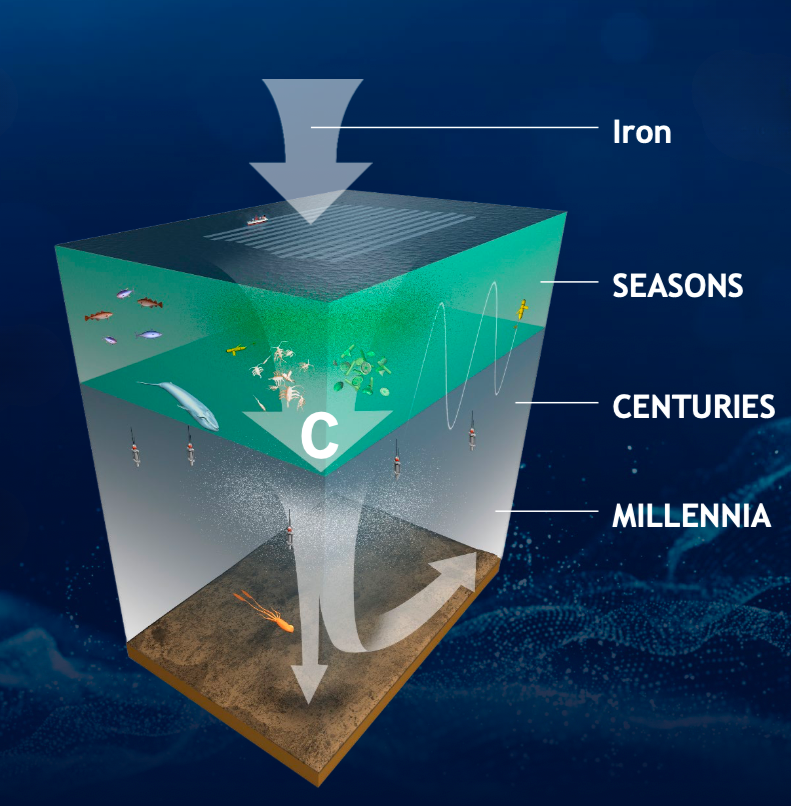
The key focus of research is proving additionality and durability. In regards to the latter, an important question is how deep this carbon needs to sink to make a lasting impact on climate. Research shows that once carbon-rich particles reach depths of 500 meters or more, they can be stored for centuries or even millennia. We don't need to bury this carbon on the seafloor, we simply need to keep it in the deep ocean long enough to help balance the climate over human timescales. While we know the ocean naturally stores carbon this way, scientists are still working to verify exactly how much additional carbon can be sent to these depths through human intervention.
What are the potential risks and concerns?
No intervention in ocean systems comes without potential impacts, and iron fertilization is no exception. Scientists have identified several areas that require careful monitoring and which Dr. Buesseler walked through the main categories:
Oxygen changes: As sinking organic matter breaks down, it consumes oxygen. Studies show that iron-driven oxygen declines are measurable but relatively small at the scale of pilots. Models predict oxygen decreases of around 3% in affected areas, which must be weighed against removing billions of tons of carbon dioxide.
Nutrient redistribution: Adding iron and stimulating growth in one area means fewer nutrients flow downstream to other regions. Research indicates these downstream effects result in biomass decreases of around 5-15%, depending on the model. While these changes matter, they need to be compared against the alternative of doing nothing as climate change continues to warm and acidify our oceans.
Harmful algal blooms: Certain phytoplankton species in coastal areas produce toxins. Extensive measurements from previous experiments show no increase in these toxins in open ocean iron studies, though continued monitoring is essential.
Other greenhouse gases: Scientists also check for the production of other greenhouse gases like nitrous oxide and methane, which could offset the benefits of carbon removal. So far, these gases represent roughly 10% or less of the carbon dioxide removed.
A recurring theme in Dr. Buesseler’s talk was that predictions depend on models, and current models vary widely. This makes real world measurements essential before any large-scale use.
Can we trust our predictions?
Current computer models of ocean processes show significant uncertainty. When scientists compared different climate models' predictions of natural carbon flux in the ocean, the estimates ranged from 5 to 12 billion tons per year. This wide range reveals how much we still have to learn about the biological carbon pump.
Models also struggle to capture all the complex processes that determine how much carbon actually reaches deep waters and stays there. This is why field studies are essential. We need real-world observations to improve our models and make accurate predictions about impacts at larger scales. The small-scale experiments conducted so far have temporary, localized effects that disappear within months as winter mixing resets ocean conditions.
What comes next for ocean iron research?
Exploring Ocean Iron Solutions (ExOIS), an international group of over 60 scientists from 37 institutions across 9 countries, is working to advance our understanding through careful, transparent research. The group operates independently and notably does not accept commercial funding tied to carbon credits. This separation ensures that scientific findings remain unbiased by financial incentives.
The research timeline spans five to ten years. Scientists plan to conduct experiments in different ocean regions, including areas off Alaska and Canada, Pacific upwelling zones, and the Southern Ocean. New technology makes this work more feasible than ever. Autonomous gliders, floating sensors, and underwater vehicles can now monitor ocean conditions for months, capturing data about temperature, chlorophyll, oxygen levels, and carbon export over much longer periods than previous ship-based studies allowed.
These experiments will follow international protocols, including environmental impact assessments required under the London Convention for work in the high seas. Public comment periods and regulatory review ensure transparency and accountability. The goal is to develop reliable protocols that could eventually be shared with organizations which might deploy this approach at scale.
Finding balance between action and caution
The challenge facing ocean conservation and climate action is finding the right balance between moving forward with research and proceeding cautiously. While some advocate for keeping hands off the ocean entirely, the reality is that we've already disrupted ocean systems through climate change. Ocean warming, acidification, deoxygenation, and heat waves are causing real harm right now.
Every marine carbon dioxide removal approach, whether it involves adding minerals, growing seaweed, or fertilizing with iron, will change ocean conditions. That's the point. If there's no change, there's no carbon removal. The question isn't whether to cause any change at all, but rather which changes offer the best balance of climate benefits against ecosystem risks.
Doing nothing is itself a choice, and current trends show where that path leads. We need roughly 5 to 10 billion tons per year of carbon dioxide removal alongside dramatic emissions reductions to address climate change. Ocean iron fertilization might contribute 1 to 2 billion tons annually if deployed widely, though much more research is needed to confirm these estimates and assess full-scale impacts.
What does this mean for the future?
The path forward requires continued research, transparent communication, careful monitoring, and adaptive management. Over the next decade, field trials will reveal whether iron fertilization can deliver durable carbon removal at acceptable environmental cost. This knowledge will empower society to make informed decisions about if, when, where, and how to deploy ocean-based climate solutions.
As conversations about climate action continue at international forums, ocean iron fertilization stands as one option worth serious consideration. The key is approaching it with scientific rigor, environmental responsibility, and recognition that protecting our ocean means both preserving its health and harnessing its potential to help stabilize our climate.
Dr. Buesseler’s closing message was clear. The world must reduce fossil fuel emissions as the first priority. At the same time, humanity needs to prepare a toolbox of safe and scalable solutions to remove carbon from the atmosphere. The ocean will need to be part of that toolbox. Iron fertilization may become one of several tools, but only if science confirms that benefits outweigh risks.