
From Planting Seeds to Catalytic Capital: How the Arbor Day Foundation is Financing the Future of Forests
Most people encounter the Arbor Day Foundation through a childhood memory: a sapling handed out at school, a lesson about why trees matter. It's a simple, enduring image. But behind that familiar face is an organization that has quietly grown into one of the most unusual players in the nature tech landscape.
Since 1972, the Foundation has helped plant over 500 million trees across more than 60 countries, backed by a network of over one million supporters. Today, that on-the-ground work runs alongside the Arbor Day Impact Fund, an investment arm deploying catalytic capital into early-stage companies building solutions across the forestry value chain. It's a rare and powerful combination: a nonprofit with the mission, the network, and now the capital to back the people building the future of forests.
We asked the team at the Arbor Day Foundation to share more about their work, their investment thesis, and what they believe the forestry monitoring sector still needs to get right.
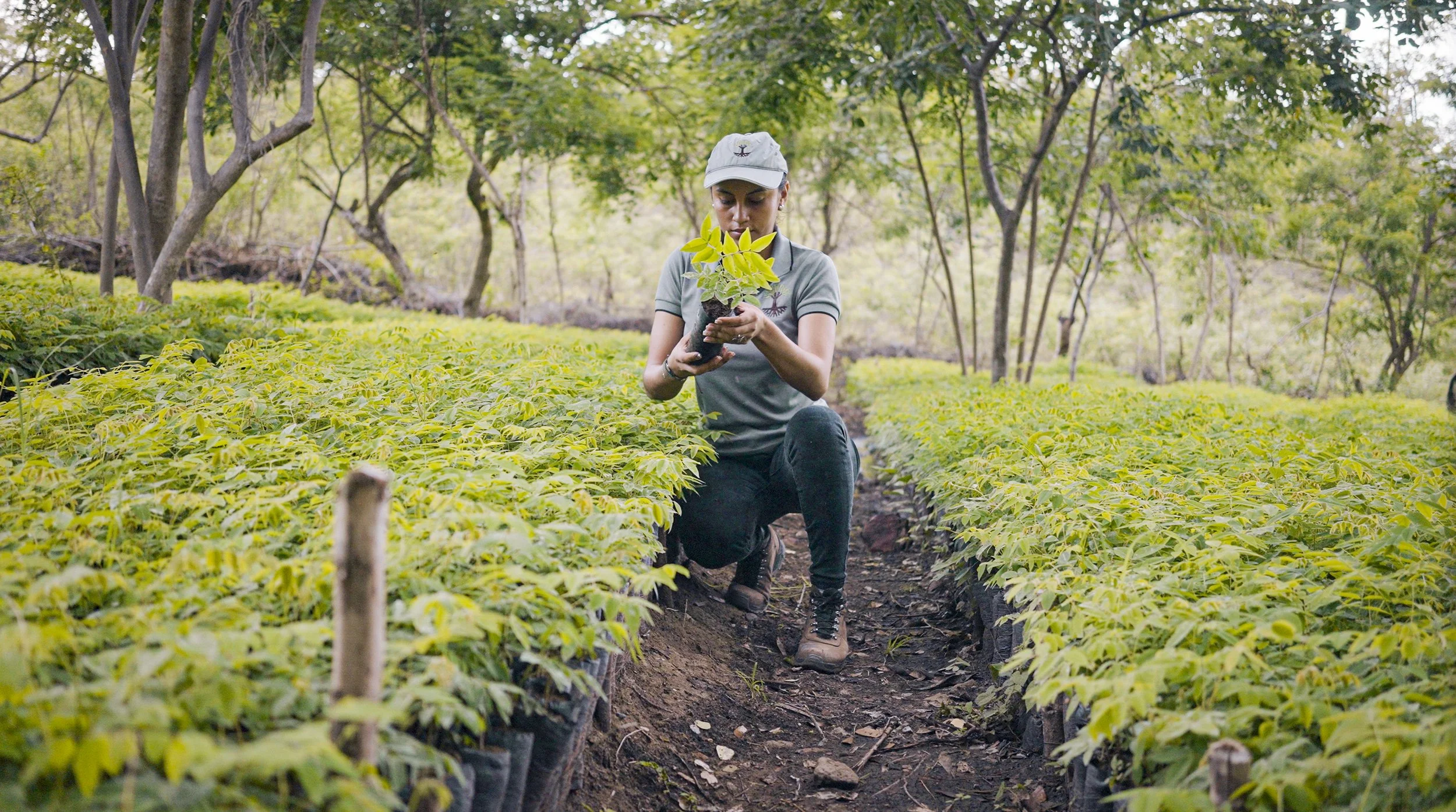
Image Credits: The Arbor Day Foundation
About the Arbor Day Foundation and the Arbor Day Impact Fund
Q. Most people know the Arbor Day Foundation as the organization that gets kids to plant trees on Arbor Day. But the work you're doing today goes far deeper than that. Can you introduce the Foundation and the Impact Fund, and tell us what the organization actually looks like in 2026?
The Arbor Day Foundation is a global nonprofit with a simple mission to inspire people to plant, nurture, and celebrate trees. We believe trees are a simple, scalable solution to some of the world’s biggest challenges.
The Arbor Day Foundation is focused on restoring forests, strengthening climate resilience, and supporting communities that depend on healthy ecosystems. We use science, data, and technology to identify forests and neighborhoods around the world where trees can have the greatest impact. Since 1972, we’ve planted over 500 million trees in more than 60 countries thanks to our network of over one million supporters.
Alongside this work, the Arbor Day Impact Fund serves as the organization’s investment arm, deploying catalytic capital into early-stage companies building solutions across the forestry value chain. The Impact Fund invests in exceptional founders whose solutions have the potential to accelerate the pace, scale, and quality of our efforts to bring our mission to life.
Q. The Arbor Day Impact Fund is a nonprofit corporate venture fund, which is a pretty rare structure. What was the thinking behind standing up an investment arm inside a nonprofit, and how does "patient, strategic capital" look different in practice from typical VC?
We stood up the Arbor Day Impact Fund a couple years ago to make investments in innovative startups that further the Arbor Day Foundation’s mission of inspiring people to plant, nurture, and celebrate trees. The idea behind the fund was to make the Foundation's idle capital, just sitting in the market, into working capital. So, while we're looking to make catalytic investments, we're set up to expect market returns rather than typical VC returns and make an outsized impact against our mission.
That flexibility also gives us the opportunity to invest in companies that may fall outside the typical VC lens. In some cases, we see value in how a company’s technology can directly support our programs, or we may have the network to help accelerate pilots, partnerships, or commercialization. As a result, we can take a more tailored approach, providing not just capital, but a pathway to deployment that helps both the company and our broader mission succeed.
Q. You invest across forestry, climate, earth data, and land use. What's the thesis connecting all of those, and what does a company need to be doing to genuinely further the Foundation's mission?
Putting trees into the ground at a global scale requires more than planting today. It requires better data to understand ecosystems, better tools to manage them, and better markets to finance their long-term stewardship.
Companies that fit our thesis will align with our mission of inspiring people to plant, nurture, and celebrate trees. And while trees in the ground is a very quantifiable metric, acreage observed or protected are other impacts we like to see a company reporting.
The Work on the Ground
Q. The Foundation recently launched a concessional loan program for reforestation project developers, who need significant upfront capital but only generate revenue through carbon credits years down the line. What gap were you seeing in the market, and what does it feel like to be one of the only players willing to bridge it?
Reforestation projects require significant upfront capital to plant and establish forests, but the primary revenue stream, carbon credits, often doesn’t materialize for several years. Traditional lenders tend to avoid that gap because it’s long-duration, biologically driven, and harder to underwrite with conventional risk frameworks.
At the same time, these are exactly the types of projects that are core to our mission and already happening across our network. So from our perspective, it wasn’t just a market inefficiency, it was a critical bottleneck to getting more trees in the ground at scale.
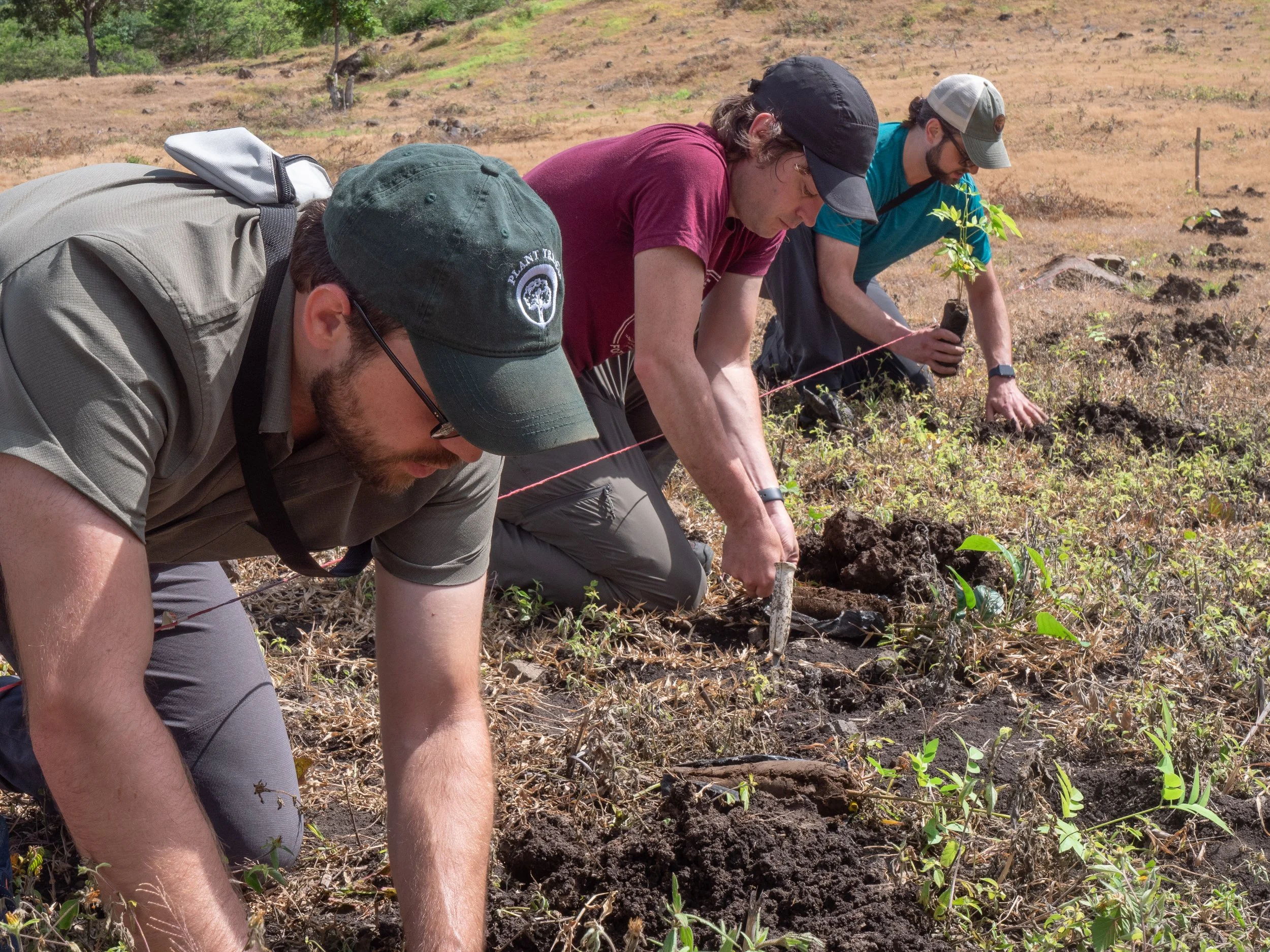
Image Credits: The Arbor Day Foundation
Q. Beyond writing checks, you bring something unusual to portfolio companies: over a million members, partners, and supports globally. Can you share a concrete example of how that network has unlocked something for a company that capital alone couldn't?
Recognizing that dollars only go so far and that any organization might have a limitation with how many dollars they can contribute, the Foundation aims to bring value to all of its partners, members and supporters in as many ways as possible to achieve our shared goals. As an example, our collaboration with MRV organizations would allow them to access hundreds of active project sites to further prove out the value of their technologies. Similarly, our network of hundreds of corporate funders may be interested in connecting to further support certain relevant use cases.
Technology and the Nature Data Gap
Q. You see a wide range of dMRV companies in your pipeline, from LIDAR backpacks walking through forests to satellites capturing canopy data at scale. What does meaningful measurement in forests actually require, and where is the sector still falling short?
There is so much impressive innovation that is occurring across the community. For the Arbor Day Foundation, we have a distinct, tree-centric mission. We inspire people to plant, nurture, and celebrate trees. We recognize the importance of not “missing the forest for the trees”, however, the challenge we're often trying to solve is whether we can reliably monitor individual trees, or stands of trees, at scale across many contexts. Satellites are incredibly cost-effective and provide broad coverage, but they largely measure forest health, not individual tree survival, especially in the critical first few years after planting when project success is largely determined.
Newer technologies like in-situ LiDAR and drones can provide that level of detail, but today they're often expensive, time-intensive, and difficult to deploy consistently across large geographies. And on-the-ground work, even in its least expensive formats, often requires significant human time to capture. As a result, despite significant advances in dMRV, we still frequently rely on traditional field surveys to validate survival and stocking rates. We believe the community is still lacking this type of cost-effective confidence at breadth and scale.
Q. You've been exploring whether to create a dedicated forestry MRV investment vehicle alongside the main fund. What's driving that interest, and what's the honest tension you're sitting with as you think it through?
From my lens, it seems like data is becoming the backbone of the NbS economy. As more capital flows into forests, everything increasingly depends on our ability to measure and verify outcomes with confidence. Whether it’s carbon credits, biodiversity claims, or resilience planning, none of it scales without credible data infrastructure. That could be why we’ve been coming across forestry MRV companies as it sits upstream of almost every decision in the space.
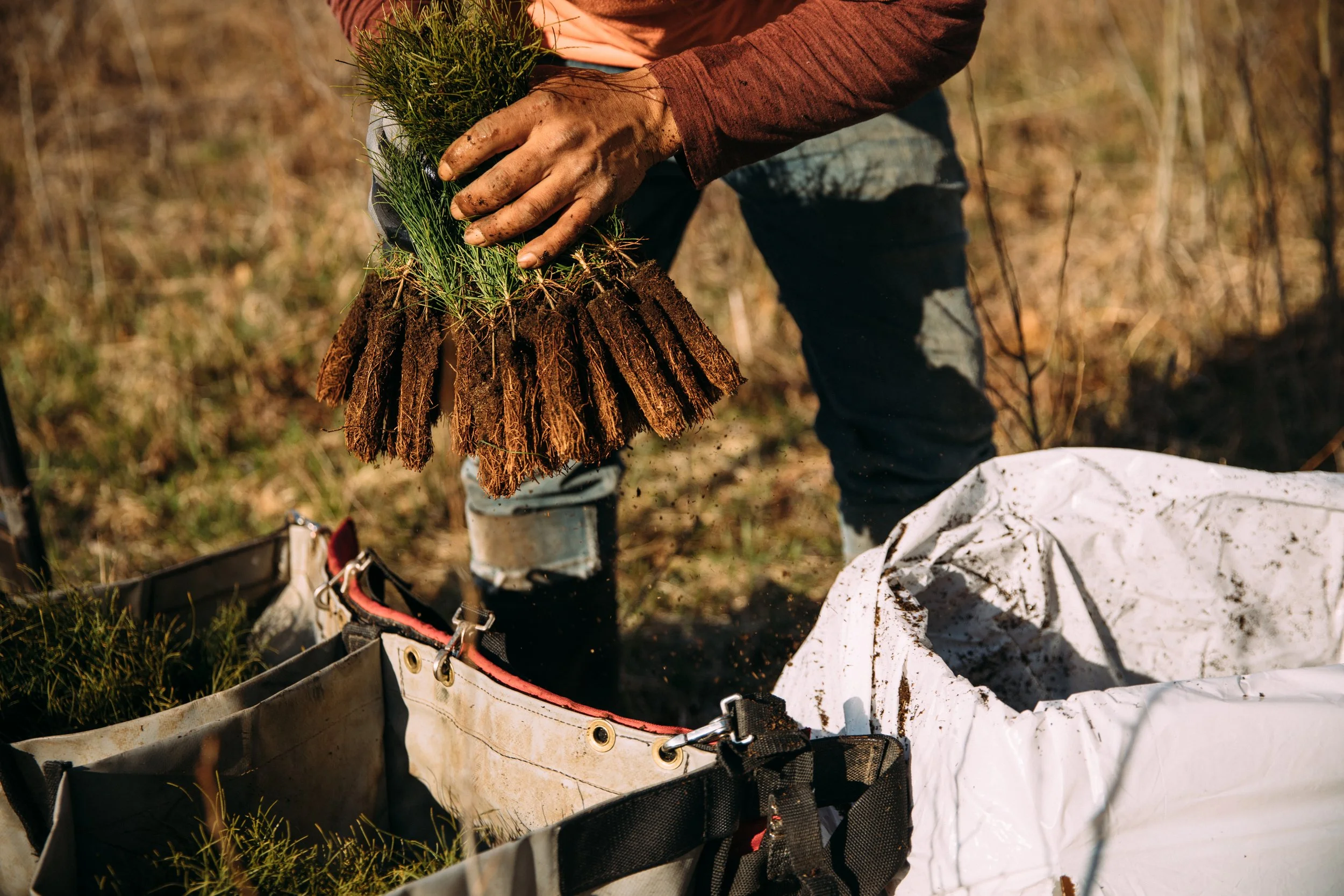
Image Credits: The Arbor Day Foundation
Collaborative Ecosystem
Q. You described staying deliberately "horse agnostic" across competing technologies, and even making introductions for companies you can't invest in yourselves. That's an unusual posture for an investor. Why does it matter to you, and what do you think the nature tech sector loses when people don't operate that way?
The Arbor Day Foundation has always been a connector in this space. We can’t do this work alone, which is why we never do. It takes all of us. Also, a sector that is fragmented creates silos of information that slows progress. The nature tech and climate tech space are very collaborative. Many of us care more about the ecosystem working as a whole, with the belief that drives better outcomes.
Q. What drew you to the Nature Tech Collective, and if you could put one problem in front of this member community, one thing you'd genuinely love help thinking through or connecting on, what would it be?
We were drawn to the Nature Tech Collective because it’s a space where the ecosystem comes together in a genuinely collaborative way; there’s a lot of innovation happening across nature tech, but it’s often fragmented, and NTC does a strong job of connecting stakeholders, surfacing opportunities, and creating a pre-competitive environment where people are actually willing to share and build together.
Trees are often called a simple solution to complex problems. But as this conversation makes clear, getting them in the ground at scale, and keeping them there, is anything but simple. It takes capital that understands long timelines, data that can track individual seedlings across thousands of acres, and a sector willing to share what it knows rather than guard it.
The Arbor Day Foundation is betting on all three. If you're working on forestry monitoring, reforestation financing, or earth data solutions and want to explore what that collaboration could look like, reach out through the NTC community or connect with the team directly on LinkedIn.
