
Interview with Cedar Systems: Rethinking How We Measure Nature
Nature tech is moving fast, yet many organisations are still stuck with slow, expensive environmental assessments that make it hard to scale real restoration. Cedar Systems is trying to shift that by making ecological measurement more practical and accessible.
In this ‘Member Spotlight: Ask the Nature Tech Expert” interview, Mitchel Rudge, Director at Cedar Systems, talks through how the team approaches this challenge, why clear ecological benchmarks matter, and how they decide which projects truly support a nature positive outcome. You’ll get a candid look at the decisions behind their work, the tensions they navigate, and the ideas they hope the wider community will pick up. If you’re interested in how nature tech can be both rigorous and usable on the ground, this is a conversation worth diving into.
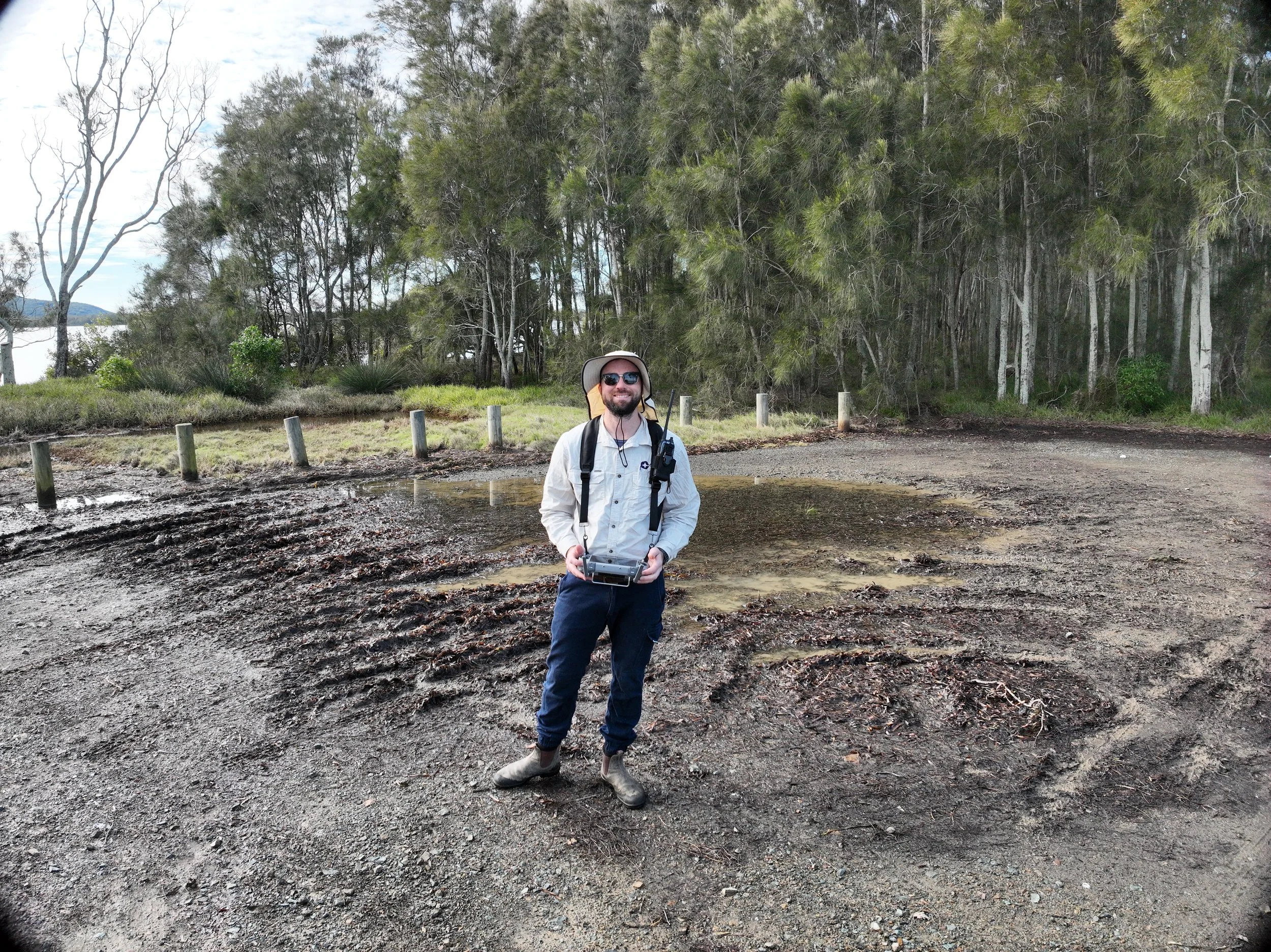
Mitchel Rudge, Director at Cedar Systems
Purpose and Positioning
Q. What motivated Cedar Systems to focus on carbon and nature assessments, and how did you decide which kinds of projects you want to champion?
I started Cedar Systems because I could see an opportunity for modern technology to play a bigger role in conservation and restoration, particularly around the global push towards nature-positive. The tools have matured quickly—drones, AI, and geospatial analytics can now (with a bit of skill, persuasion, and luck) measure ecological condition at a speed and consistency that just wasn’t possible a decade ago. It seemed like a good time to try to build something practical that helps organisations working to improve ecosystems.
A lot of the existing environment sector’s focus is on impact assessments in relation to planning approvals. While these processes are important, they’re often slow and expensive, which might be ok if a big infrastructure budget is involved, but it’s harder to make it work for nature-positive projects where funding is often limited. So I think that if we can make ecological measurement and assessment faster and more affordable, more of the budget can flow to actual restoration. That’s a core idea behind Cedar Systems. I get pretty excited when a new approach can reduce cost or increase integrity by an order of magnitude.
Q. You’ve been asking yourselves, “How do we say no to projects?”, what does a nature-positive “yes” look like for you?
Saying no to an opportunity is pretty hard to imagine when you're trying to grow a business, but it’s important. If we want to talk about being part of the transition to a nature-positive future, I think its incumbent upon us to carefully consider the nature impacts associated with the projects we work on.
In some ways, opportunities can be seen on a continuum: At one end are the nature-negative projects, let’s say doing environmental assessment work for a large fossil fuel development that will lead to a direct decline in biodiversity and significant indirect emissions. This would be a nature-positive “no”. At the other end are projects that deliver tangible restoration outcomes, reducing threats and increasing habitat. This would be a nature-positive “yes”. But opportunities are rarely this clean cut. A classic example is when restoration is funded through offsets from development. It’s tricky.
In practice, Cedar Systems focuses on projects that we believe will contribute to a nature-positive outcome, even within these messy realities. I’d welcome a wider conversation within the Nature Tech Collective around how we define the ethical boundaries of our work. An industry code or shared framework would make these decisions more transparent and consistent, and I’d be keen to work with other NTC members to explore what this might look like.
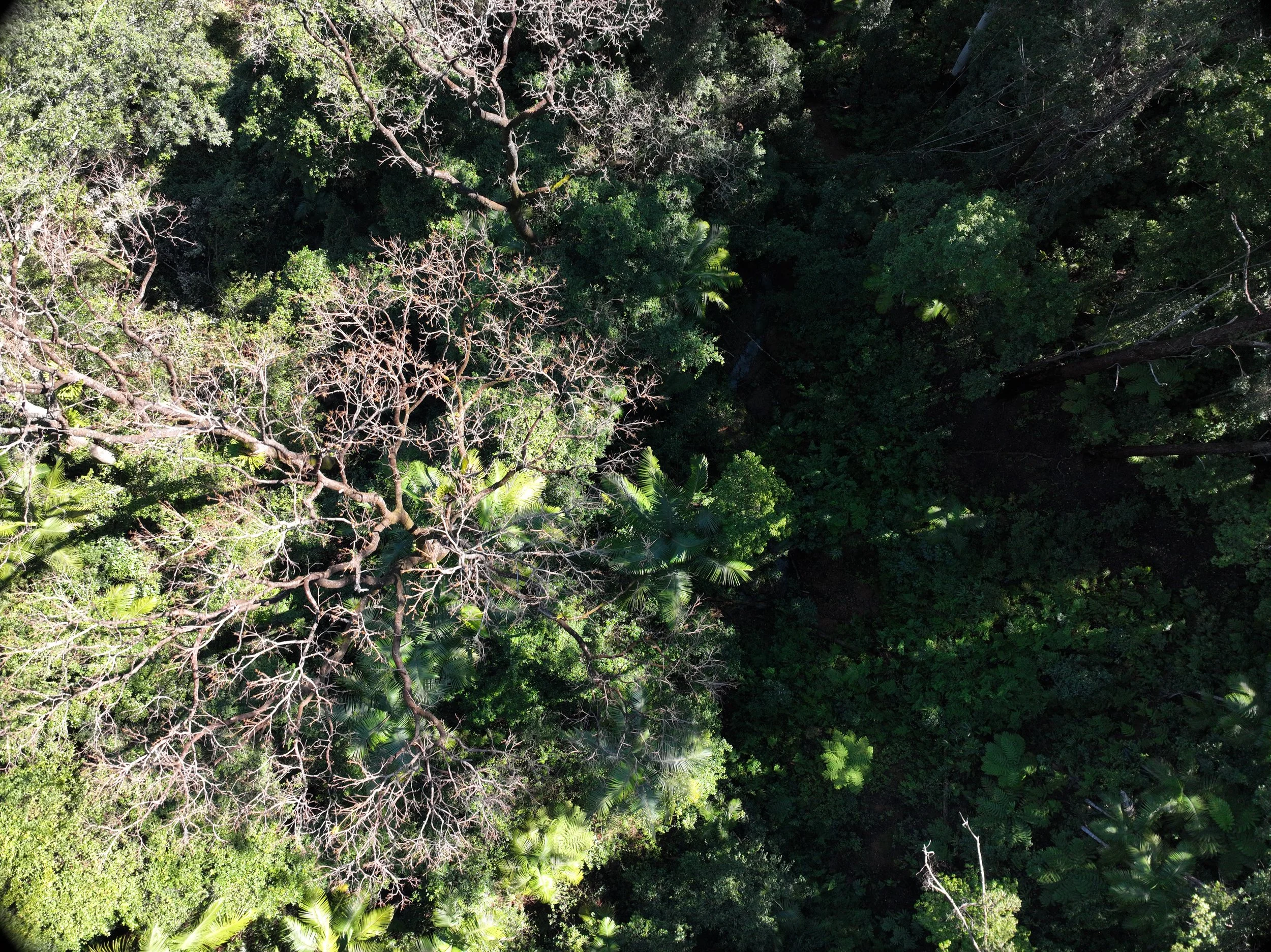
Credits: Cedar Systems
Approach and Impact
Q. When you assess a landscape, what signals or indicators tell you that a restoration project is genuinely on the right track?
When assessing whether a restoration project is on the right track, the first thing I think about is a reference to ecosystems, this is the benchmark against which success is measured. Ideally this is a real, intact ecosystem in the same region, somewhere we can actually visit and quantify.
It’s not a perfect approach because reference sites come with their own histories, and they don’t always reflect future climate impacts or recent changes in land management. But in my experience, having real numbers to work toward is more useful than working from an abstract description. .
Once the reference is established and a set of indicators is selected, the change in condition can be quantified as the difference between the reference and the restoration site. Instead of saying “we want a healthy forest” or “we want to plant 10,000 trees”, we can say something like “we’re aiming for 30% canopy cover and 50 stems per hectare” or whatever the right indicator might be. Many of these indicators can be monitored rapidly and cheaply with satellites and drones, so we can see whether a site is moving toward the reference condition - and if it’s not, what needs to be done to help it get there.
Q. How do you balance scientific rigor with supporting grassroots, community-led restoration work?
I don’t think scientific rigour and community-led restoration are incompatible. While traditional ecological studies with expert ecologists can become very complex, the underlying principles of best practice restoration are not, and can be applied in much simpler ways.
As an example, reference ecosystems (as mentioned above) are recommended by the best practice standards published by The Society for Ecological Restoration. Local volunteers could visit nearby reserves or national parks and make observations, looking at things like canopy cover, the mix of trees and shrubs, the presence of ground layers, or the range of species and their abundances.
This kind of observation could give community projects a clear, evidence-based starting point to help them to set goals around how the restored ecosystem should look. Naturally I also see a democratising role for new technology in supporting community restoration.
Joining the Collective
Q. What led you to join the Nature Tech Collective at this moment in your journey?
Cedar Systems joined because many of the organisations I really respect including cecil.earth, Xylo Systems, Pachama, Space Intelligence, and hula.earth, are already part of the collective. They’re doing ambitious and meaningful work, and being in the same community as these people can only be a good thing.
Q. What kinds of conversations, connections or collaborations are you hoping to find here, especially around choosing work that aligns with your mission?
I’m looking for both technical and non-technical connections within the Collective. On the technical side, there are some real challenges that ecology-focused people aren’t necessarily equipped for things like cloud infrastructure, data security, and building effective marketing and sales systems. Sharing experiences and pooling resources could make all of our businesses stronger and help us deliver better results.
The non-technical relationships might be even more important. Who knows where conversations with people all around the world who share a similar mission and enthusiasm could lead? Hopefully long term collaboration, opportunities and inspiration.
Credits: Unsplash
Personal Reflections
Q. What sparked your commitment to nature-positive work in the first place?
I think that growing up in a country town in Australia, and spending a lot of time in the bush really shaped my interests. Then early in my career I was lucky enough to work across some incredible parts of northern Australia, where you can see both the beauty and the scale of the challenges. I see the nature-positive transition as a chance to address some of the challenges faced by the world's ecosystems at a scale that actually makes a difference. I honestly can’t imagine doing anything else.
Q. Is there a book, thinker or podcast that has shaped how you approach nature tech, carbon assessment or restoration?
The writing that has had the biggest impact on how I think about our work is Simon Levin’s paper The Problem of Pattern and Scale in Ecology. I would recommend it to anyone working in this field. So many of our issues in ecological data come back to pattern and scale; when the scale of our measurements misalign with the scale of the patterns we are trying to capture. If everyone read that paper we would have a better language to engage with these themes.
Q. What keeps you grounded when navigating the tension between purpose-driven work and project-based realities?
That’s a good question. The truth is the work is often a grind. Days are spent in data, code, and trying to get workflows to run. And the practical realities of running a business don’t go away, which means managing money, reaching out to prospects, and making sure your admin is up to date.
What keeps me grounded is talking to clients who are out there doing the real work, removing weeds, managing pests, planting trees, protecting endangered species, and engaging with the community about why it’s important. These people are genuinely passionate about improving ecosystems under tight budgets and big workloads. Chatting to them helps me to see the bigger picture of why the work of Cedar Systems matters.
Cedar Systems brings a grounded view to nature tech. Their work sits at the intersection of data, field practice and the everyday challenges of running a mission driven business. As they keep refining their approach, they’re also looking for more open conversations across the sector about ethics, project choices and collaboration. It’s a reminder of how much this community can learn from one another. For more information about Cedar Systems and their ongoing projects, check out their LinkedIn here.
