
How Taking Root is scaling reforestation by focusing on the systems behind growing forests
Overview
Planting trees is only the beginning. The real challenge is growing forests that last.
Every reforestation project that moves beyond a pilot eventually hits the same wall. Field teams spread across hundreds of kilometres. Farmers at different stages of their restoration journey. Parcels that need different interventions depending on species, age, and time of year. And no shared system to track any of it, let alone prove it to an auditor or a corporate buyer.
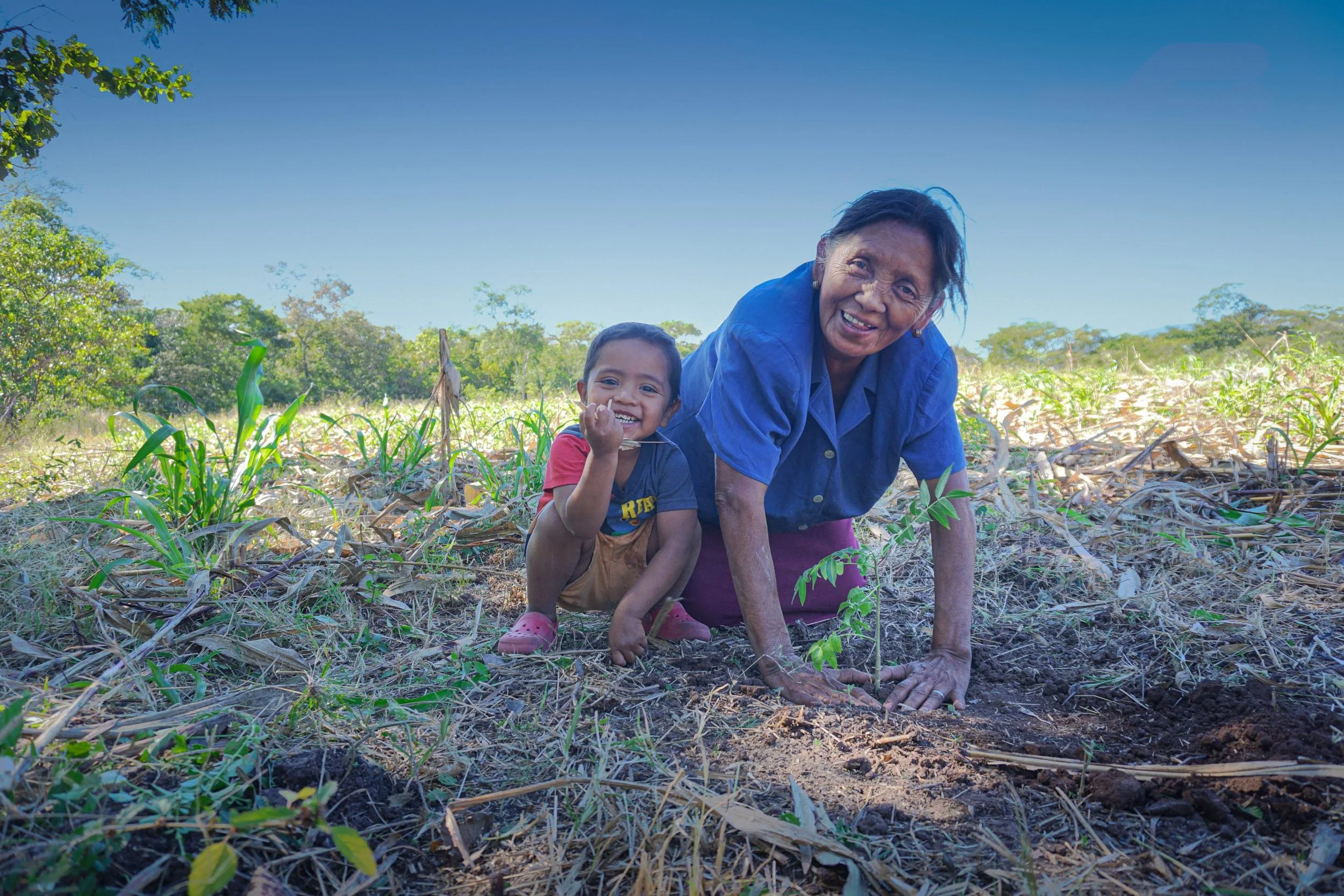
Taking Root works with smallholder farmers in Nicaragua through CommuniTree, their flagship reforestation program. The model integrates trees into existing farm systems in ways that generate real income for farmers, starting with carbon co-investment payments in the early years and moving into timber, wood products, and sustainable harvesting over time. When Taking Root's founder started asking smallholder farmers in Nicaragua why they weren't planting trees, he wasn't met with resistance. The answer was economic. Trees took too long to pay off. Farmers were making rational decisions, and trees lost out to faster returns every time. Carbon revenue helps address that timing problem by creating earlier financial returns.
But turning that insight into a project covering 4,900 farming families and nearly 11,000 individual land parcels required something that didn't exist. A platform built specifically for managing dispersed smallholder reforestation at scale, tracking every activity on every parcel, keeping field teams consistent, and generating the verified evidence that makes credits credible to buyers like Microsoft, Springer Nature, and SAP, all of whom have purchased from the project.
That platform didn't come from a technology company. It came from fifteen years of operational necessity.
Why This Is Hard
Reforestation is not just a planting event. It is a multi-year management process that gets harder to manage as it grows.
A single parcel needs weeding, replanting where trees haven't survived, pruning, thinning, and different interventions at different points in its development. Multiply that across thousands of parcels, each at a different stage, spread across a country, managed by field technicians with varying levels of experience, and the coordination problem becomes the project.
Taking Root ran into two distinct layers of this.
The first is operational. Without a shared system, individual technicians develop individual practices. The recipe for growing trees correctly starts to diverge across teams and geographies. Quality drops in ways that don't surface until an audit or a monitoring visit. Adding more land doesn't just add more work, it adds more variability, and variability in a carbon project is a credibility problem.
The second is proof. The voluntary carbon market demands transparent, verifiable evidence that trees are growing where the project says they are. Saying so is not enough. Taking Root needed to show tree survival rates, basal area, and carbon sequestration figures backed by field data, not assumptions. That requires a monitoring system rigorous enough to satisfy third-party auditors on a five-year cycle, while still being practical enough for technicians to use daily in remote locations.
Land tenure sits underneath both of these. Before any farmer joins the program, their right to the land has to be established. In Nicaragua, land tenure documents arrive crumpled, handwritten, folded, or partially damaged. Reviewing them one by one, against a framework for what counts as valid evidence, was consuming hundreds of person-hours a year before Taking Root found a way to automate the first pass.
One Approach in Practice
Taking Root's platform was not designed in advance. It was built piece by piece to support the operational needs that emerged as the project grew.
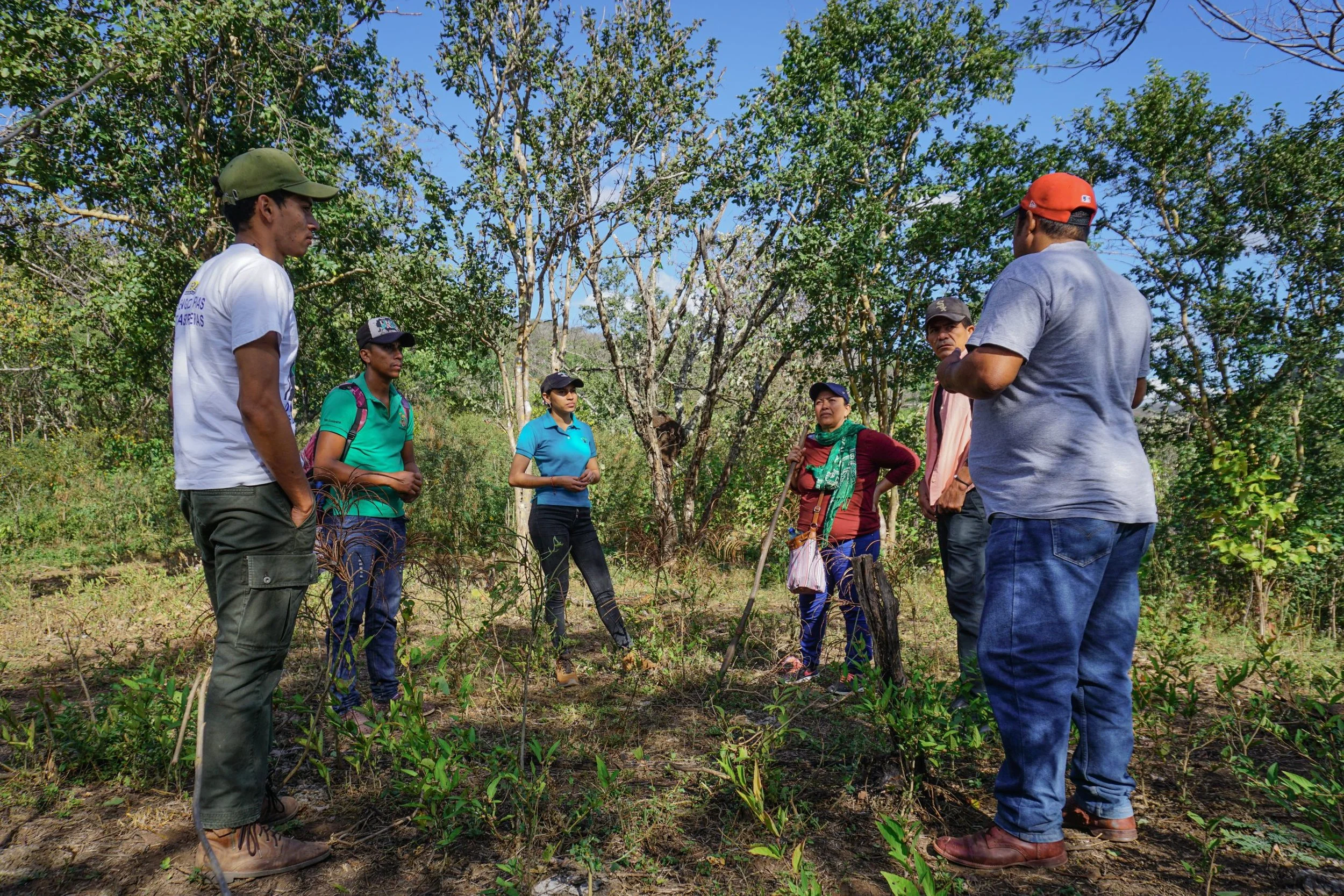
The starting point is recruiting. Before a farmer joins the program, a field technician tracks them through a series of eligibility checks: land ownership rights, land tenure, suitability of the parcel, and whether the farmer has the capacity to carry out the activities the program requires. Once eligible, the technician physically walks the perimeter of the land using the mobile app, capturing a precise polygon of the parcel while also identifying any obstacles to planting or growth. That boundary data is uploaded to the platform, which generates sampling plots for future carbon monitoring and produces an initial carbon sequestration estimate for the site.
The contract comes from those inputs. It ties the co-investment payments Taking Root makes to the farmer directly to the size of the land and the activities required. Once signed and uploaded, it becomes part of the project's compliance and transparency record.
From there, farmers move into the operational phase. Field technicians visit regularly, logging work activities against each parcel: what was planted, what was weeded, what was replanted, how complete the work is across the site. Every log is time-stamped and geotagged. Photos uploaded as evidence are tied to the location where they were taken. Taking Root has accumulated close to half a million of these work logs across the project's history.
That volume of data does more than satisfy auditors. It gives the operations team a live picture of where the project stands against its own schedule. A dashboard showing 22,500 activities logged in a single month, broken down by type, makes it visible if pre-planting work is running late in July when it should already be done, or if nursery activities are behind in ways that will affect planting season. Teams can see which parcels or technicians need attention before problems grow.
Planting designs are developed in collaboration with farming communities. Each region uses between four to six native species, selected based on what farmers want on their land alongside what works from a carbon modeling perspective. Over 120 additional species beyond those originally planted have been recorded within the project's monitoring sampling plots.
Land tenure review sits at the base of all of this. Every farmer who enters the program needs documented proof of their right to the land. In practice, those documents arrive in poor condition: handwritten, crumpled, folded, sometimes damaged. Taking Root built a rule-based framework for what counts as valid tenure evidence, then trained an AI model to do the first-pass review against it. Running the AI alongside human review produced agreement rates of between 96 and 98 percent. The AI now handles clear-cut cases, flagging anything uncertain for human review, saving hundreds, potentially thousands, of person-hours in land tenure processing each year.
Tree monitoring runs as a third phase. Monitoring teams use the platform in the field to measure individual trees and track growth against carbon targets. That data feeds into the five-year third-party audits that validate the project's credits externally.
The platform is not yet a tool that farmers use directly. It is used by technicians in support of farmers. The longer-term vision is a platform intelligent enough to guide anyone through the program regardless of their technical knowledge.
What This Enables and What Is To Come
The platform closes a gap that has undermined reforestation projects for a long time: the distance between what a project reports and what is actually happening on the ground.
Close to half a million logged field activities, each tagged with time and geo-location data, means Taking Root can show corporate buyers and auditors not just that trees were planted, but that they were weeded, replanted where necessary, and managed consistently over time. That evidence is what separates a credible carbon project from one built on estimates. It is also what has attracted repeat buyers such as Springer Nature, and SAP, alongside organizations including Microsoft.
The co-investment model underneath the platform matters as much as the technology itself. Farmers who receive payments tied to restoration activities on their own land have a direct economic reason to keep the work going. Taking Root doesn't purchase or lease land. The farmers remain the stewards. That structure is what gives the project its durability argument, and durability is what corporate buyers are increasingly paying for. CommuniTree has been certified under the Plan Vivo standard for fifteen years and goes through third-party verification audits every five years. For carbon market buyers, that track record is part of what the platform makes possible.
The AI land tenure tool removes a bottleneck that anyone working with smallholder farmers in similar contexts will recognise. Legal land documents in these settings are rarely clean. A system that can handle the first pass on damaged or handwritten paperwork, reliably and at scale, removes a significant drag on how quickly new farmers can enter the program.
Taking Root has also signaled that the platform could have a life beyond their own projects. The operational problem they solved, managing dispersed smallholder parcels consistently at scale, is not unique to Nicaragua. Other project developers working in similar contexts have expressed interest, and Taking Root is actively exploring what that could look like. At the same time, they are thinking about how the platform could develop further to become a tool that supports farmers directly, alongside the technicians and project teams who use it today.
That longer-term evolution also includes exploring how artificial intelligence could further support field operations. With the AI land tenure review tool already developed, the next phase is a recommendation engine that identifies which activities are required and which parcels may need attention. Currently, the platform functions as a ‘pull’ tool, effectively tracking activities and progress; this next stage will see it evolve into a ‘push’ tool, using the accumulated data to help guide actions in the field by proactively indicating which interventions to prioritize, on which parcels, and at what point in the season.
The CommuniTree program in Nicaragua remains Taking Root’s most mature and established project. Restoring more than 18,000 hectares across nearly 11,000 parcels is genuine scale, with fifteen years of learning having shaped both operations and the technology platform. The organization is now applying those lessons to new projects in other regions, including Chile.
What Others Can Take From This
Build the operational infrastructure before the scale, not after. Taking Root's platform came from the operational needs of a growing project. Managing thousands of parcels without a shared system meant quality diverged across teams in ways that were hard to see and harder to fix. The earlier a project invests in operational consistency, the less ground it has to recover later.
Let the operational problem drive the technology, not the other way around. The platform Taking Root built is designed around the specific complexity of managing dispersed smallholder parcels across a single country. It wasn't lifted from another sector or adapted from a generic tool. Projects looking at a similar challenge should start from what is actually breaking down in their operations, not from what technology is available.
Co-investment is a durability mechanism, not just a payment structure. Farmers who earn income tied to restoration activities on their own land have a reason to protect the forest that outlasts any project cycle. Taking Root doesn't own or lease the land. That distinction matters for permanence in ways that no monitoring technology can substitute for.
Activity-level evidence is what makes credits defensible. Tree survival rates and carbon sequestration figures are the outputs. The half a million logged field activities behind them are what make those figures hold up to scrutiny. Projects that invest in field-level data collection from the start build a record that gets more valuable over time.
AI has a practical role in land tenure review, and it is a narrower one than it might sound. Taking Root didn't automate land tenure. They built a rule-based framework first, trained a model against it, ran it alongside human review until the agreement rate gave them confidence, then deployed it only for clear-cut cases. That process is the lesson, not the AI itself.
Scaling quality alongside quantity is as much a people problem as a technology one. The platform amplifies existing expertise, it doesn't replace it. The knowledge has to be there first. Projects that treat technology as a substitute for field expertise will find that out the hard way.
This is one model built around specific conditions: a long-standing presence in a single country, deep community relationships built over fifteen years, and a carbon market that provides the financing mechanism that makes farmer co-investment viable. The transferable parts are in the operational approach and the incentive structure, not in the specific instruments used to deliver them.
Case Classification:
Material Change · Monetization · Measurement & Monitoring · Market Pressures · Reforestation · Smallholder Farming · Carbon Credits · Operational Field Management · Hybrid MRV · AI-assisted Land Tenure Review · Agroforestry · Nicaragua
*Photo and Video Credits: Taking Root
